Understanding Four Levels of Hospice Care: A Comprehensive Guide
Medicare defines four levels of hospice care: routine home care, continuous home care, general inpatient care, and respite care. Routine home care is the most common level, provided in a patient’s residence. Continuous care offers short-term, intensive nursing during a crisis. Inpatient care manages severe symptoms in a facility. Respite care gives caregivers temporary relief.
Key Takeaways
Routine home care provides scheduled hospice visits in the patient’s residence.
Continuous home care offers intensive nursing during acute symptom crises at home.
General inpatient care manages severe symptoms in a facility when home care fails.
Respite care gives family caregivers a planned break of up to five days.
What Are the Four Levels of Hospice Care?
The Centers for Medicare and Medicaid Services defines four levels of hospice care. Every Medicare-certified hospice provider must offer all four levels. A patient may experience all four levels within a single week or ten days of hospice services.
Hospice care focuses on comfort and support for individuals with terminal illnesses and a life expectancy of six months or less. Coverage comes through Medicare, Medicaid, and most private insurance plans.
The four levels of hospice care explained are:
Routine home care: delivered wherever the patient lives
Continuous home care: short-term intensive support during a crisis
General inpatient care: facility-based care for symptom management
Respite care: temporary relief for family caregivers
What Are the Medicare 4 Levels of Hospice?
The medicare 4 levels of hospice follow the Medicare Hospice Benefit structure. Most insurance plans adopt these same guidelines. Each level addresses a specific care need, and patients move between levels as conditions change.
How Do the Levels Differ?
Routine home care provides scheduled visits from the hospice team. Continuous home care offers around-the-clock nursing during acute symptom episodes. General inpatient care manages symptoms that cannot be controlled at home. Respite care gives caregivers a planned break of up to five days.
How Does Routine and Continuous Home Care Differ?
Routine home care delivers scheduled hospice visits where a patient lives. Continuous home care provides intensive, short-term nursing when symptoms become severe. Both levels keep patients in familiar surroundings, but the intensity and purpose differ sharply.
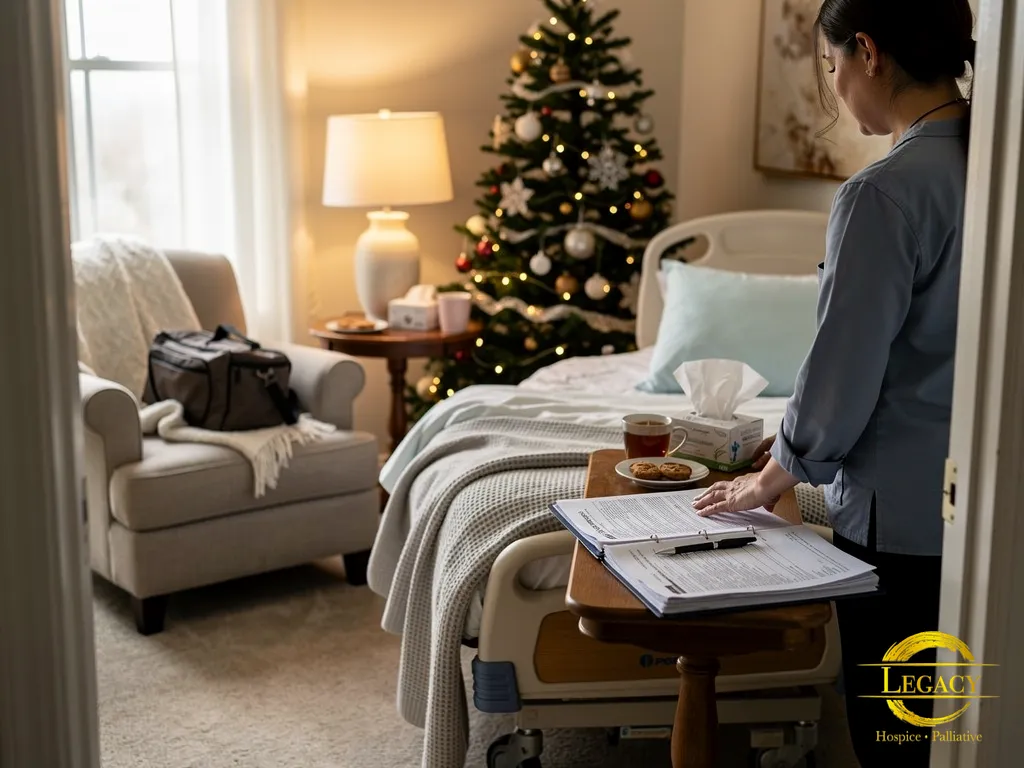
Most hospice patients receive routine home care as their primary level of support. A multidisciplinary team visits the home, nursing facility, or assisted living community on a planned schedule. These visits address pain management, symptom control, and emotional needs. Family caregivers handle daily tasks between professional check-ins.
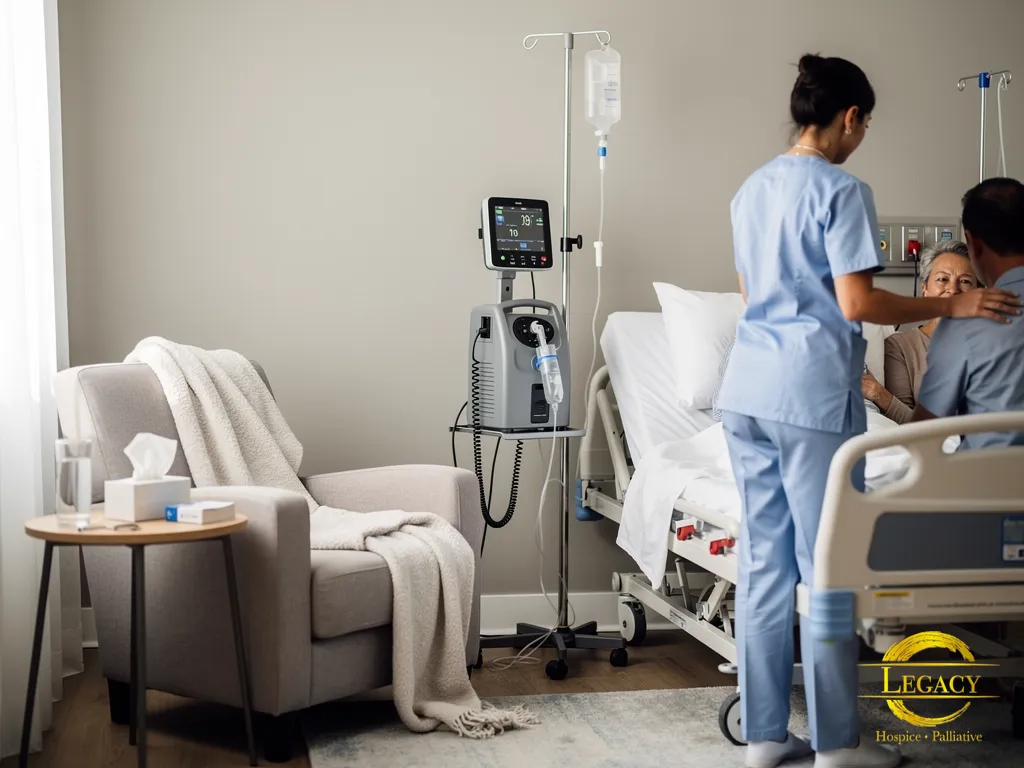
Continuous home care activates during a crisis. Medicare defines this level for periods when a patient requires predominantly nursing care to manage acute symptoms at home. The goal is preventing a hospital transfer. Skilled nurses remain in the home for extended hours until the crisis stabilizes.
What triggers continuous home care instead of routine visits?
A sudden escalation in pain, breathing difficulty, or agitation triggers the shift. The hospice team assesses whether intensive nursing can control the crisis without moving the patient. Continuous care lasts only as long as the acute episode persists.
Where does each level of care take place?
Both levels occur where the patient resides. Legacy Hospice & Palliative Care provides services in private homes, nursing homes, and assisted living facilities. The setting stays constant; the staffing intensity changes. Families navigating these decisions benefit from understanding the full scope of hospice support, including how care adapts to different illnesses.
When Is Inpatient or Respite Care the Right Choice?
General inpatient care and respite care serve distinct needs within the four levels of hospice care explained by Medicare. Inpatient care becomes necessary when severe symptoms cannot be managed at home. Respite care offers temporary relief for exhausted family caregivers. Both options protect patient dignity while addressing different crises.
What triggers a move to general inpatient hospice care?
A patient transfers to inpatient care when pain or symptoms spiral beyond home management. The Medicare 4 levels of hospice framework authorizes this step for acute symptom crises. A hospice facility or hospital provides round-the-clock skilled nursing until stability returns. The patient then transitions back to routine home care.
How does respite care support family caregivers?
Respite care gives caregivers a planned break lasting up to five days. The patient stays in a Medicare-approved facility while the family rests and recharges. Continuous home care hospice criteria differ from respite rules. Continuous care addresses short-term medical crises at home. Respite addresses caregiver exhaustion. Families in the Inland Empire can explore caregiver relief options through local hospice providers.
The distinction between inpatient vs routine hospice care inland empire families face often comes down to crisis versus sustainability. Inpatient care solves a medical emergency. Respite care prevents one. Legacy Hospice & Palliative Care, located in Chino, CA, provides compassionate hospice care with a 5/5 rating. The goal remains constant: improving quality of life for patients and their families through comfort, dignity, and compassion.
FAQ
What triggers a shift from routine home care to continuous home care?
A sudden escalation in acute symptoms like pain or severe dyspnea triggers the shift.
Where does general inpatient care take place?
It provides facility-based care for symptom management.
How long does respite care last for caregivers?
It provides temporary relief for family caregivers.
Conclusion
Understanding the four levels of hospice care equips families to make informed decisions when symptoms shift or caregivers need relief. Each level serves a distinct purpose, and patients move between them as needs change. Families should discuss these options with their hospice team early, ensuring they know which level applies during a crisis and which offers scheduled support. This knowledge transforms an overwhelming experience into a manageable plan focused on comfort, dignity, and quality of life.