
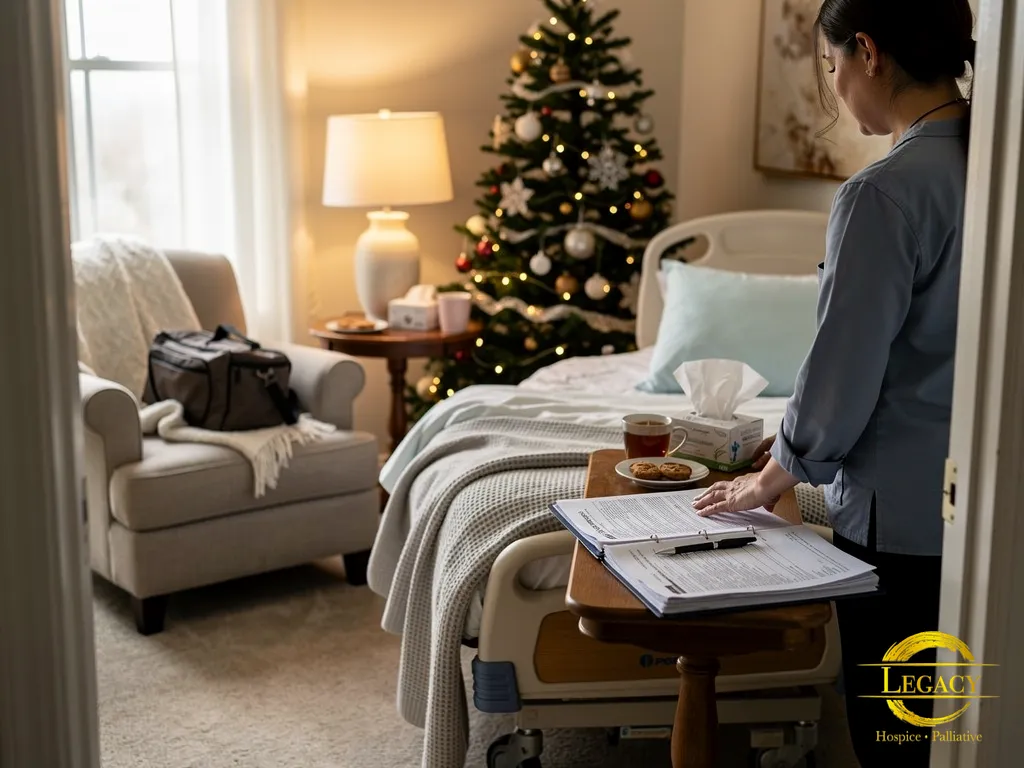
Navigating Hospice During the Holidays
Holiday care for hospice patients centers on comfort, dignity, and connection, not perfection. Legacy Hospice & Palliative Care’s multidisciplinary team (doctors, nurses, social workers, and counselors) helps families adapt traditions to a loved one’s energy and needs. Small moments, quiet gatherings, and flexible plans create meaning. Families in Chino, CA, receive tailored support for emotional and spiritual well-being.
Key Takeaways
Hospice care focuses on comfort and support for individuals with terminal illnesses and a life expectancy of six months or less.
Adapting traditions, such as replacing a large dinner with a small meal at the bedside, makes the day meaningful.
Small, familiar rituals like a favorite song or quiet visit carry more weight than a large gathering on Thanksgiving.
Setting expectations before guests arrive, including shortening the event and limiting the guest list, protects the patient from overstimulation.
How can you prepare for hospice during the holidays?
Preparing for hospice during the holidays starts with a clear understanding of the care’s purpose. Hospice care focuses on comfort and support for individuals with terminal illnesses and a life expectancy of six months or less. The primary focus is providing comfort, dignity, and quality of life for patients in their final stages. Families in the Inland Empire often discover that starting services now provides extra support and reduces stress. This decision lets the whole family focus on love and togetherness instead of medical logistics.
What are the first practical steps to take?
A family’s preparation follows a straightforward sequence. These steps create a foundation for meaningful moments.
Contact a provider for an evaluation. A Legacy Hospice & Palliative Care professional assesses the patient’s needs and explains how comfort is maintained at home, in a facility, or in a hospital.
Designate a primary family caregiver. One person coordinates with the hospice team, ensuring consistent communication about symptom management and daily routines.
Prepare the home environment. Arrange a quiet, accessible space with favorite blankets, photos, and minimal clutter. This setting supports the patient’s dignity and allows for peaceful visits.
Communicate holiday expectations early. Family members discuss visit lengths, noise levels, and activity plans. Setting these boundaries protects the patient from overstimulation and emotional exhaustion.
How does starting care now change the holiday experience?
Delaying a decision about entering hospice until after a holiday is a natural impulse. Yet starting care during this season provides immediate relief. A multidisciplinary team manages pain and complex symptoms, freeing family members from constant medical worry. The focus shifts from caregiving tasks to sharing a quiet cup of tea or looking through old photographs. Grief during holidays hospice settings becomes more manageable when professional bereavement support is already in place. The holiday transforms into a time of connection rather than a source of overwhelming stress.
What support exists for a thanksgiving with hospice patient?
Adapting traditions makes the day meaningful. A large dinner can be replaced with a small, favorite meal served at the patient’s bedside. Family members might take turns sharing a memory or reading aloud. The goal is presence, not perfection. Legacy Hospice & Palliative Care provides guidance on these adaptations, ensuring the day honors the patient’s comfort above all else. Understanding the full scope of available services helps families make informed choices. A detailed look at hospice care benefits and support clarifies how comfort and dignity remain the central focus.
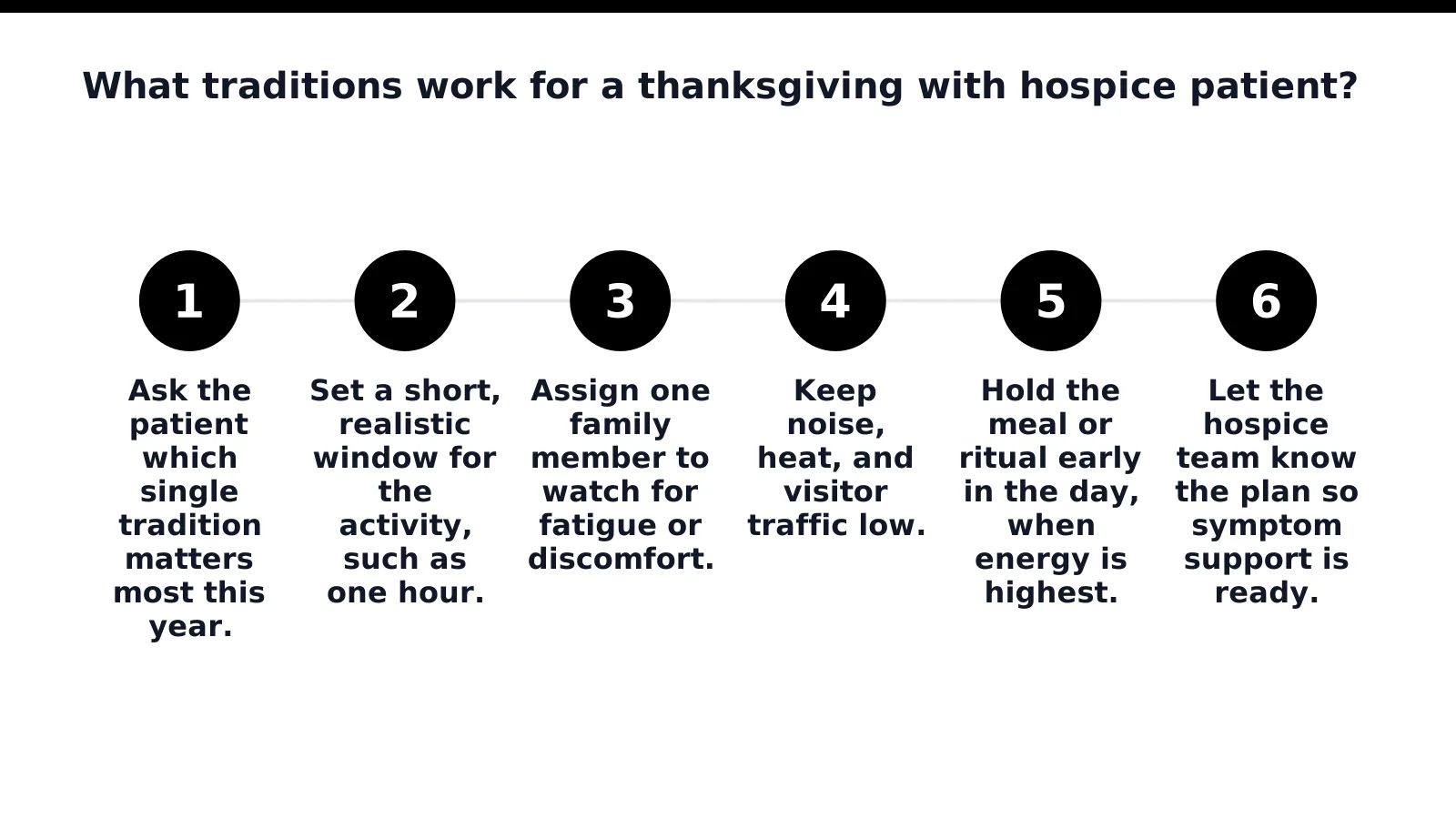
What traditions work for a thanksgiving with hospice patient?
Small, familiar rituals often carry the most weight on Thanksgiving Day. A favorite song, a familiar meal, a quiet visit, or a photo album can hold more meaning than a large gathering. Families planning a thanksgiving with hospice patient care in mind can build the day around comfort rather than spectacle.
Legacy Hospice & Palliative Care approaches hospice during the holidays with the same priorities that guide year-round care: medical support, pain management, symptom control, emotional and spiritual care, and bereavement support for families. The goal is to improve quality of life for patients and their families during the final stages of life, with comfort, dignity, and compassion at the center.
How can families adapt Thanksgiving traditions?
Adaptation works better than cancellation. A shared cup of tea, a quiet moment with held hands, or a short prayer at the bedside often means more than a full formal dinner. Minor gestures frequently carry the deepest meaning.
Follow these steps to shape a workable plan:
Ask the patient which single tradition matters most this year.
Set a short, realistic window for the activity, such as one hour.
Assign one family member to watch for fatigue or discomfort.
Keep noise, heat, and visitor traffic low.
Hold the meal or ritual early in the day, when energy is highest.
Let the hospice team know the plan so symptom support is ready.
What should families do when grief surfaces during the holiday?
Grief during holidays hospice settings is normal and expected. Some family members want to mark every tradition; others feel too tired to decorate a tree. Realistic goals protect everyone. Holiday caregiver support inland empire families can request from the hospice team includes emotional and spiritual guidance alongside bereavement support, so no caregiver carries the day alone.
How do you manage energy and symptoms during gatherings?
Energy and symptom management during holiday gatherings starts with pacing, not pushing. A loved one receiving hospice during the holidays often tires quickly and may feel overwhelmed by noise, heat, visitors, or activity, so families should plan the day around the patient’s comfort rather than the calendar.
Hospice care typically involves a multidisciplinary team of healthcare professionals, including doctors, nurses, social workers, counselors, and volunteers. These professionals work together to address physical, emotional, and spiritual needs. Their combined expertise makes symptom control and emotional support part of the holiday plan, not an afterthought.
What should a family do before the gathering begins?
Set expectations before guests arrive. Shorten the event, limit the guest list, and identify a quiet room where the patient can rest. Families should also confirm medication schedules and symptom-control plans with the care team in advance. Services provided in hospice care include pain management, symptom control, emotional support, spiritual care, and help with daily activities, and each of these can be adapted to the day.
How can symptoms be managed during the event itself?
Assign one person to watch for fatigue, pain, or overstimulation, and act early. A brief rest break often prevents a difficult afternoon. The hospice care team roles guide explains how nurses, aides, and social workers divide this support. Palliative care adds symptom management, psychosocial and spiritual support, decision-making assistance, and advance care planning. Families in the Inland Empire can also arrange holiday caregiver support so no single person carries the day alone.
Choose a shorter window for the gathering.
Designate a quiet rest space.
Confirm the medication and symptom plan.
Assign one symptom-watcher.
Build in rest breaks before fatigue sets in.
Grief during holidays can surface alongside physical symptoms, so families should watch for emotional strain as closely as pain. A thanksgiving with hospice patient gathering works best when traditions shrink to fit the patient’s energy, and when the family accepts that a smaller, quieter day still counts as meaningful.
What boundaries help with holiday caregiver support inland empire?
Families in the Inland Empire protect their energy by setting realistic goals for the season and refusing to chase other people’s expectations. Heart to Heart Hospice advises families to enter the holidays with realistic goals and desires while staying flexible when plans shift. That single decision prevents most holiday burnout.
Holiday caregiver support inland empire families rely on starts with a short list of limits agreed upon before the first event. Use these steps to set them:
Name the one or two traditions that matter most, and release the rest without guilt.
Set a visiting window for guests, then hold to it even when relatives push for more.
Decline any gathering that requires travel the patient cannot tolerate.
Ask the hospice team to help outline personalized goals for the season.
Schedule rest periods around events rather than after exhaustion sets in.
How should caregivers handle family pressure during the holidays?
Relatives often push for a normal celebration, and caregivers absorb that pressure silently. Heart to Heart Hospice recommends doing only what is comfortable and avoiding the trap of living up to others’ expectations. A caregiver who states limits early faces fewer arguments later. Legacy Hospice & Palliative Care, located in Chino, CA, serves Inland Empire families through this kind of planning.
Where can families find backup support?
The hospice team itself provides care, guidance, presence, and respite opportunities for both patient and family during the holidays. Legacy Hospice and Palliative Care holds a 5/5 rating, and its team helps families build a season that fits their real capacity. Families needing a longer break can explore caregiver relief options before the calendar fills.
How can you navigate grief during holidays hospice brings?
Grief during holidays hospice brings often surfaces as a mix of disconnect, guilt, depression, loneliness, anger, and fear. Heart to Heart Hospice notes that caregivers and patients alike experience these emotions when seasonal traditions collide with terminal illness. The goal is not to force celebration. The goal is comfort, dignity, connection, and support.
Acknowledging these feelings without judgment creates space for healing. Legacy Hospice & Palliative Care includes bereavement support as a core service, helping families process loss even before death occurs. This support continues for families following the loss of a loved one.
What emotions commonly arise during holiday hospice care?
Holidays amplify grief in unexpected ways. A familiar song or empty chair at the table triggers waves of sadness. Some family members feel guilty for experiencing moments of joy. Others withdraw entirely, unable to face traditions that now feel hollow. Naming these responses reduces their power.
How can families honor grief while still observing the holiday?
Small, intentional rituals carry profound meaning. Lighting a candle in the loved one’s honor or sharing one cherished memory before a meal acknowledges the loss without overwhelming the gathering. Legacy Hospice & Palliative Care’s team guides families through anticipatory grief, offering coping strategies that blend remembrance with present-moment connection.
Practical steps help structure an emotionally safe day:
Set a single, realistic intention for the holiday rather than a full agenda.
Designate a quiet room where anyone can retreat when emotions intensify.
Assign a trusted family member to monitor the patient’s energy and signal when rest is needed.
End the gathering early enough to allow decompression before nightfall.
Hospice care is covered by Medicare, Medicaid, and most private insurance plans, removing financial barriers to professional grief support. Families in the Inland Empire access these services without added strain during an already difficult season.
FAQ
How can families prepare for hospice care during the holidays?
Families contact a provider for an evaluation, designate a primary caregiver, prepare a quiet home space, and communicate holiday expectations early. These steps protect the patient from overstimulation and support meaningful connection.
What does a Thanksgiving with a hospice patient look like?
A large dinner is replaced with a small, favorite meal served at the bedside. Family members take turns sharing memories or reading aloud, focusing on presence rather than perfection.
How does starting hospice care during the holidays change the experience?
Starting care provides immediate relief by managing pain and symptoms, freeing family members from medical worry. Professional bereavement support is already in place, shifting the holiday from stress to connection.
Conclusion
The holidays do not demand perfection, they demand presence. Families who set realistic intentions, honor grief openly, and lean on their hospice team for symptom and emotional support create a season defined by connection rather than obligation. Start with one small tradition, protect rest, and let the care team carry the medical weight. That single shift transforms a stressful holiday into a meaningful one, allowing families to focus on what matters most: being together with comfort and dignity.