
Explore Essential Symptoms of Liver Failure at End of Life
Comfort, dignity, and symptom relief guide our approach when end-stage liver disease or cirrhosis reaches six months or less in life expectancy. We provide pain management, symptom control, emotional and spiritual support, and family bereavement care at home, in hospice facilities, or in hospitals, wherever you need us most.
Hospice care for end-stage liver disease and cirrhosis shifts focus from curative treatment to comfort, managing symptoms like ascites, confusion, and jaundice through a multidisciplinary team. Legacy Hospice & Palliative Care, based in Chino, CA, coordinates physicians, nurses, counselors, and volunteers to support families, easing pain while preserving dignity during this unpredictable, often crisis-driven stage of illness.
Key Takeaways
- End-stage liver disease creates unpredictable crises requiring comprehensive medical care and symptom management throughout treatment.
- Hospice care relieves pain, controls symptoms, and reduces anxiety for patients and families facing liver failure.
- Legacy Hospice & Palliative Care provides medical care, pain management, emotional support, and bereavement services in Chino, CA.
- Hospice eligibility applies to terminal illnesses with six months or less life expectancy, offering comfort-focused care at home or facilities.
When Does Liver Disease Call for Hospice Care?
Hospice eligibility generally applies when a patient’s prognosis is six months or less, assuming the illness follows its natural course. Advanced cirrhosis rarely follows a tidy path, though. Decline tends to move in uneven waves: a stable stretch, then a hospitalization, then a new complication that changes the picture entirely.
That unpredictability is exactly why end stage liver disease hospice care decisions feel so difficult for families. A doctor remains the only person qualified to make a clinical determination of life expectancy in this setting. Families and caregivers, however, can watch for patterns that suggest the disease has moved past aggressive treatment and toward comfort-focused support.
Why is timing so hard to determine with liver disease?
Liver failure rarely declines in a straight line, which makes predicting a six-month window genuinely difficult. A patient may stabilize for weeks, then suddenly face a crisis requiring hospitalization. This back-and-forth pattern is one reason physicians and families often revisit the hospice conversation more than once.
What is the hospice mission for liver disease patients?
The mission centers on relieving pain, managing symptoms, and reducing anxiety for both patients and their families. Current clinical guidance now supports introducing palliative approaches early, rather than waiting until the final weeks. Comfort becomes a priority throughout the disease’s advanced stages.
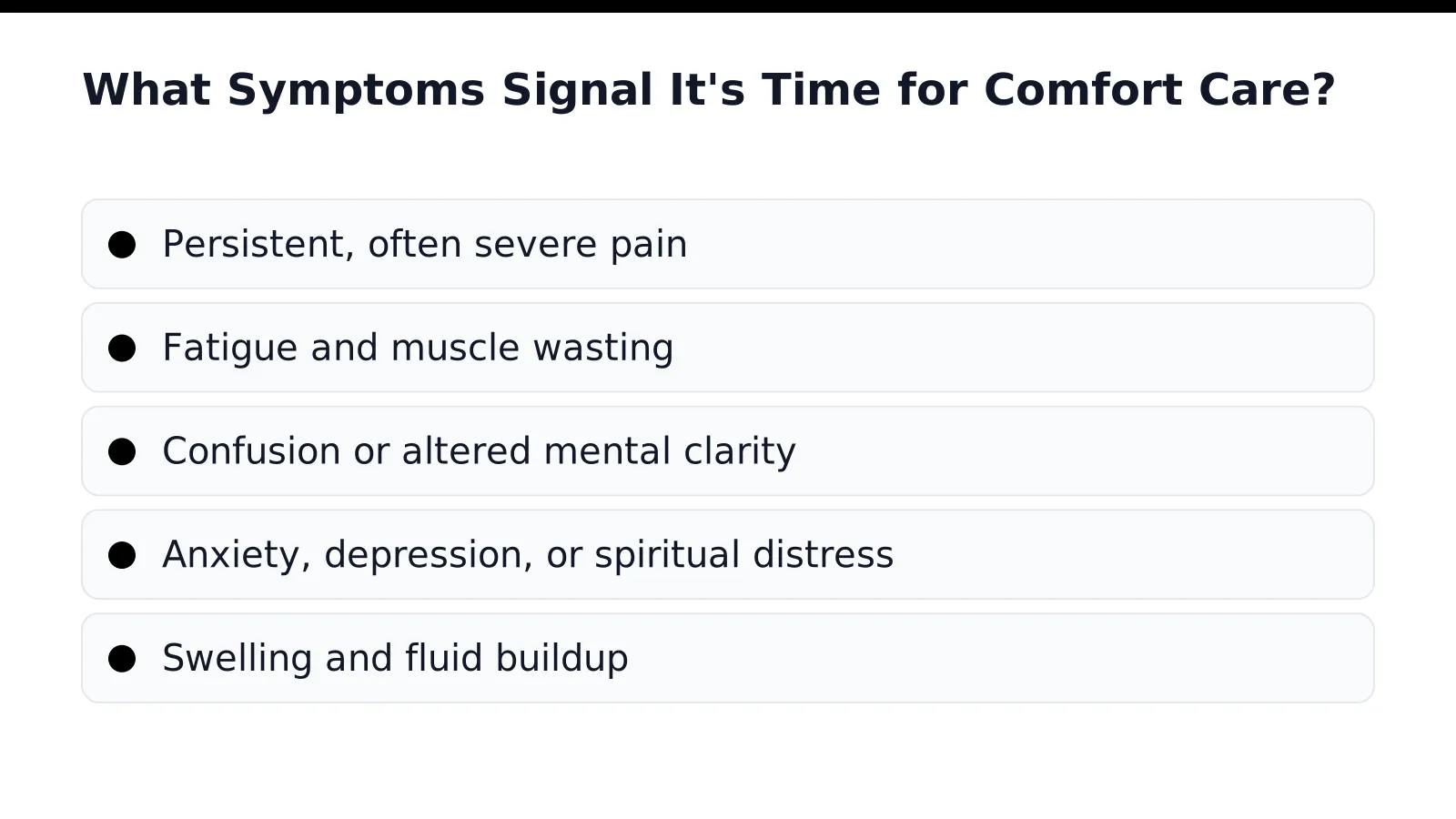
What Symptoms Signal It’s Time for Comfort Care?
Sudden complications often mark the turning point toward end stage liver disease hospice care. A patient can feel stable for weeks, then a crisis, a new hospital admission, or an unexpected setback changes the picture overnight. That unpredictability, rather than a single dramatic event, is often the clearest sign that curative treatment has reached its limits.
Cirrhosis rarely announces its final stage with one obvious marker. Instead, daily life gradually narrows around medications, appointments, and symptom checks until little room remains for anything else. Families frequently notice this shrinking routine before a physician confirms it clinically.
What are the most common liver failure end of life symptoms?
Advanced liver disease carries a heavy physical, mental, and spiritual symptom burden. Liver failure end of life symptoms typically include:
- Persistent, often severe pain
- Fatigue and muscle wasting
- Confusion or altered mental clarity
- Anxiety, depression, or spiritual distress
- Swelling and fluid buildup
Pain deserves particular attention. Comparative symptom data places pain prevalence in end-stage liver disease alongside rates seen in cancer patients, underscoring how significant this burden becomes.
Cirrhosis hospice comfort care addresses each of these needs directly, shifting focus from cure to relief. Families searching for hospice for liver disease inland empire support can expect a team built around exactly this transition.
How Does Hospice Support Families Close to Home?
Families facing advanced cirrhosis gain a different kind of support once hospice begins. The focus moves away from emergency room visits and crisis management toward comfort, dignity, and peace within the patient’s own surroundings. For a disease that narrows daily life around symptoms and appointments, this shift matters enormously.
End stage liver disease hospice care brings together a full team dedicated to easing that burden. Doctors, nurses, social workers, counselors, and volunteers work as one unit, addressing physical pain alongside emotional and spiritual strain. No single discipline carries the weight alone.
Core services typically include:
- Medical care and cirrhosis hospice comfort care focused on symptom relief
- Pain management tailored to liver-related complications
- Emotional and spiritual support for patients and caregivers
- Bereavement support that continues for families after loss
Where Does Hospice Care Actually Take Place?
Hospice care adapts to the patient’s needs rather than forcing a single location. Families can choose home-based care, a dedicated hospice facility, or hospital-based support when symptoms require closer monitoring. This flexibility lets families stay near a patient managing liver failure end of life symptoms without upending daily life.
Does Insurance Cover Hospice for Liver Disease?
Medicare, Medicaid, and most private insurance plans cover hospice services. Families searching for hospice for liver disease inland empire options can expect coverage to ease much of the financial burden during an already difficult season.
FAQ
How do families know it’s time to consider hospice for liver disease?
Families notice an unpredictable pattern of stability followed by sudden crises, new hospitalizations, or complications that signal curative treatment has reached its limits. A doctor makes the clinical determination of six-month life expectancy.
What symptoms does hospice care manage in end-stage liver disease?
Legacy Hospice & Palliative Care manages symptoms like ascites, confusion, and jaundice through a multidisciplinary team of physicians, nurses, counselors, and volunteers. This team-based approach relieves pain while preserving patient dignity.
Where does Legacy Hospice & Palliative Care provide end-of-life support?
Legacy Hospice & Palliative Care, based in Chino, CA, delivers pain management, symptom control, emotional and spiritual support, and family bereavement care. Services are available at home, in hospice facilities, or in hospitals.
Conclusion
In closing, end-stage liver disease and cirrhosis demand compassionate, specialized care that prioritizes comfort and dignity during life’s final chapter. Legacy Hospice & Palliative Care understands the profound challenges families face and stands ready to provide expert symptom management, emotional support, and guidance tailored to each patient’s unique needs. Whether care occurs at home or in a facility, our commitment remains unwavering: to honor your loved one’s wishes while surrounding your family with compassionate expertise every step of the way.