What Patients Should Know About Transitioning to Home Hospice
Legacy Hospice & Palliative Care in Chino, CA, coordinates hospital discharge planning, home medical equipment delivery, and 24/7 symptom management once patients are at home, ensuring Inland Empire families receive pain control, emotional support, and bereavement services immediately upon arriving home for terminal patients.
Comfort-focused coordination makes hospital-to-home hospice transitions manageable in the Inland Empire. Legacy Hospice & Palliative Care, based in Chino, CA, delivers medical care, pain management, symptom control, and emotional/spiritual support directly in patients’ homes, easing families through this sensitive shift.
Comfortable hospital-to-home hospice discharge in the Inland Empire requires coordinated planning between hospital staff, physicians, and a multidisciplinary hospice team covering doctors, nurses, social workers, and counselors. Legacy Hospice & Palliative Care, serving Inland Empire families from its Chino, CA base, manages medication transfer, equipment delivery, and symptom control to prevent miscommunication during the transition home.
Key Takeaways
- Legacy Hospice & Palliative Care provides comprehensive medical care, pain management, and symptom control during transitions.
- Hospice care focuses on comfort and support for patients with life expectancy of six months or less.
- Our team delivers emotional and spiritual support plus bereavement services for families throughout the care journey.
- Home-based hospice care eliminates hospital uncertainty and enables patients to receive specialized attention in familiar environments.
What Happens When Hospital Discharge Moves to Hospice?
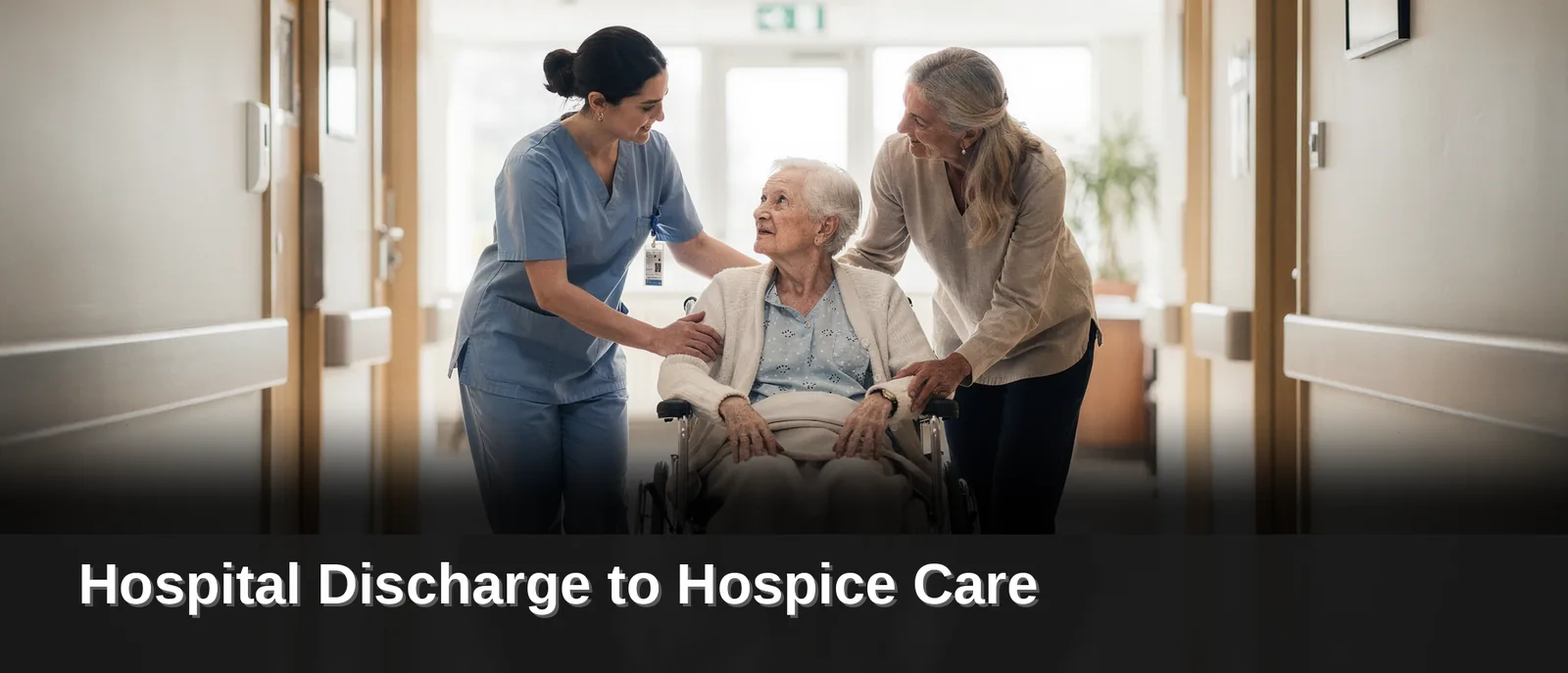
Discharge planning changes direction entirely once a hospice referral enters the picture. Rather than preparing a patient for more procedures, the hospital team begins preparing the family for comfort-centered care at home. Hospital discharge to hospice care marks a fundamental shift away from aggressive medical interventions and toward dignity, comfort, and quality time together.
This shift often starts with a physician’s recommendation. When curative treatments are no longer expected to help, doctors raise hospice as the next step. Families across the Inland Empire frequently hear this news in a hospital setting, which can feel abrupt without support in place for transitioning from hospital to home hospice.
Who Qualifies for Hospice at the Point of Discharge?
Hospice care generally applies to patients with a prognosis of six months or less, assuming the illness follows its expected course. This eligibility standard guides most discharge conversations. Physicians and hospice teams review the diagnosis together to confirm the timeline before finalizing a referral.
What Does Hospice Actually Provide After Discharge?
Hospice care offers medical support focused on comfort and dignity, not a cure. For Inland Empire families, that means:
- Pain and symptom management at home
- Emotional and spiritual support for patients and loved ones
- Coordination between the hospital team and the hospice care team
Inland Empire hospice discharge coordination ensures the handoff from hospital to home happens smoothly and without unnecessary delay.
How Does Discharge Coordination Actually Work?
Discharge coordination works as a structured handoff, not a single phone call. Moving a patient from a hospital bed to home hospice involves multiple teams, shared records, and a clear plan for medication and symptom management. Tara C. Friedman, MD, writing for Hospice Referral: Moving from Hospital to Home, notes that this transition is inherently complex, and miscommunication between hospital staff and hospice providers over goals of care or medications commonly heightens stress and fear for patients and caregivers alike. Families across the Inland Empire facing a hospital discharge to hospice care decision need that handoff to be deliberate, not rushed.
What Steps Happen Before Discharge?
Clarifying goals of care comes first. Physicians and hospice staff review what the patient wants, what symptoms need managing, and what support the home environment can realistically provide. For inland empire hospice discharge coordination, this often means coordinating with care teams at regional medical centers before a patient ever leaves the building.
Where Does Hospice Care Actually Take Place?
Care continues wherever it serves the patient best.
- At home, surrounded by family
- In a dedicated hospice facility
- Within a hospital setting, when medical needs require it
Transitioning from hospital to home hospice rarely follows one script. A San Bernardino hospital to hospice transfer may look different from a transfer in a neighboring Inland Empire community, but the coordination principles stay consistent.
What Should Families Expect After Discharge?
Discharge day brings relief, but the days that follow carry real risk without proper support. Nearly one in five Medicare patients returns to the hospital within 30 days of discharge, according to a report on home health care transitions, and many of those readmissions can be prevented with the right care in place. For Inland Empire families navigating hospital discharge to hospice care, that statistic underscores why a coordinated plan matters from the first hour at home.
Smooth transitioning from hospital to home hospice depends on bridging the gap between hospital staff and home-based caregivers. Coordinated support keeps recovery or comfort care moving forward without the gaps that often trigger setbacks or confusion.
What does hospice support look like in the home?
Hospice care at home combines medical oversight with pain management, symptom control, emotional and spiritual support, and bereavement care for families. A team-based approach means no single person carries the burden alone.
Does insurance cover hospice care after a hospital stay?
Medicare, Medicaid, and most private insurance plans cover hospice services, easing a major financial worry during an already difficult transition.
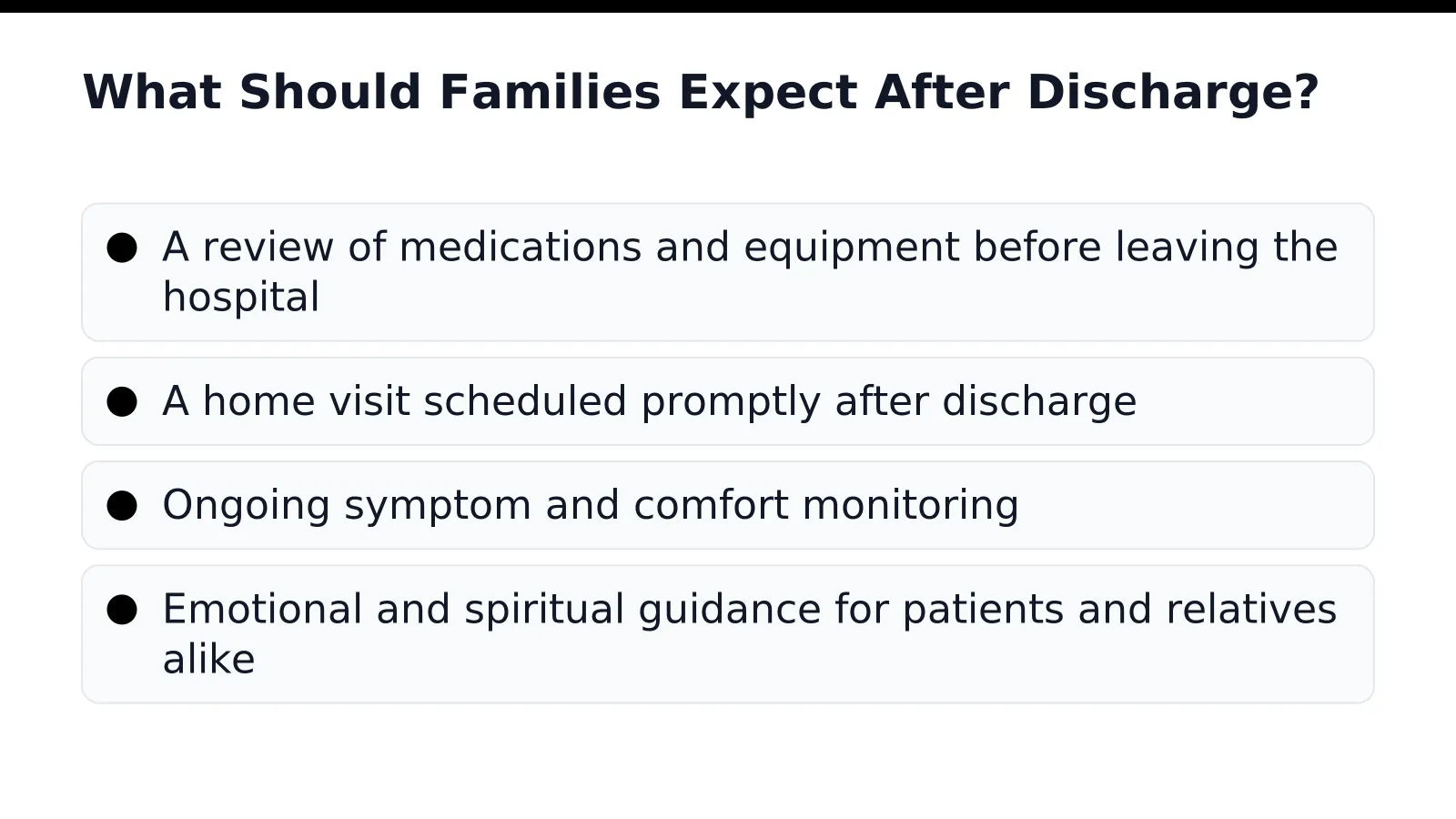
Families across the Inland Empire can expect:
- A review of medications and equipment before leaving the hospital
- A home visit scheduled promptly after discharge
- Ongoing symptom and comfort monitoring
- Emotional and spiritual guidance for patients and relatives alike
Legacy Hospice & Palliative Care coordinates closely with regional hospitals to keep that transition steady and well-supported.
FAQ
Who qualifies for hospice care at the point of hospital discharge?
Hospice care generally appl
Conclusion
In closing, transitioning from hospital to home hospice care represents a meaningful shift toward comfort, dignity, and quality time with loved ones. By understanding the discharge process, preparing your home environment, and embracing the comprehensive support our team provides, you create a foundation for peaceful, compassionate care during this important chapter. The Inland Empire families we serve discover that home-based hospice honors both patient wishes and family needs, transforming end-of-life care into a deeply personal experience centered on what matters most.